LiveWire ran its own online sales channel from 2021 and closed it in early 2023, not for lack of demand but because 50 states of titling, registration and paperwork consumed close to six full-time roles. With Ekho, LiveWire.com is a working sales channel again: the rider configures, finances and pays online in about twenty minutes, Ekho performs the transaction work on every order, and each completed sale is routed to a LiveWire dealer to deliver. Hundreds of orders and millions of dollars in vehicle value have reached the network from riders in 31 states and 99 cities.
“We had already proved riders would buy a motorcycle from us online. We proved it with our own team, on our own site, and it worked. What we struggled to do was run it efficiently. Fifty states of paperwork and titling with a handful of teammates became a bottleneck. Ekho gave us the online channel back, and this time every order lands with a dealer.”
About LiveWire
LiveWire builds premium electric motorcycles. It began inside Harley-Davidson as the company’s electric program, was carved out as a standalone business through a SPAC merger completed in 2022, and became the first publicly traded electric motorcycle company in the United States. Harley-Davidson remains its majority stockholder.
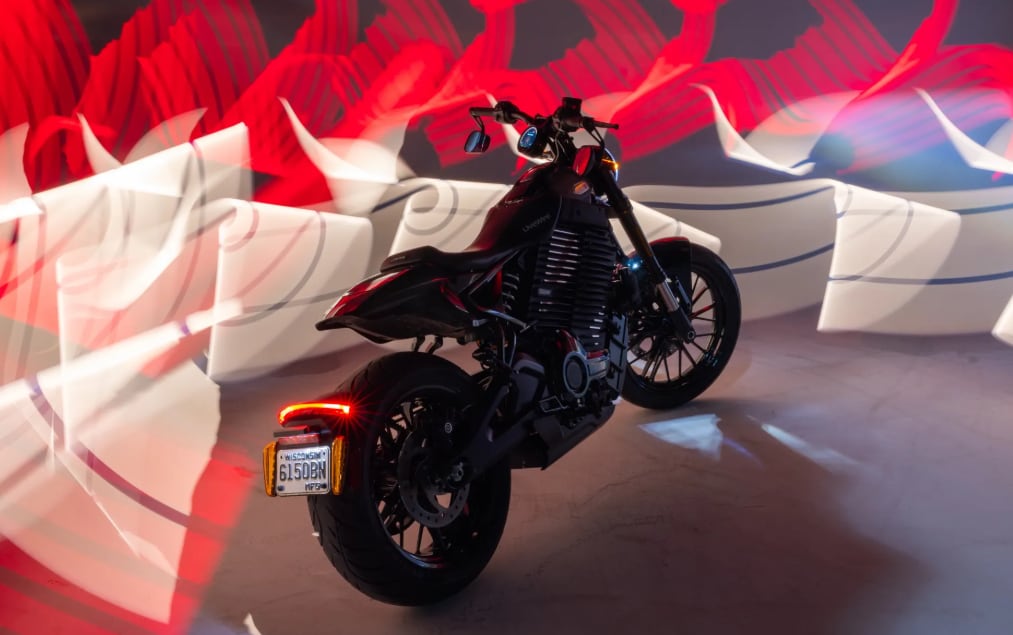
Its S2 platform anchors the lineup, with the Del Mar electric street tracker, the Mulholland electric performance cruiser, and the Alpinista electric sport standard. The all-new S4 Honcho, in Street and Trail versions, entered production in 2026 at a materially lower entry price and opens the brand to off-road and trail riders. In 2026, LiveWire acquired the assets of Dust Moto, adding more electric off-road engineering to the business.
LiveWire sells through a network of dealerships across the United States. LiveWire.com is one of the most visited sites in powersports, and it is where most riders meet the brand for the first time.
The channel LiveWire built, but eventually closed
This is not a story about a brand that had never sold online. LiveWire had invested meaningful time and legal resources into standing up its own, in-house online sales channel, and it worked.
From 2021, a rider on LiveWire.com could configure a motorcycle and place a deposit. From there, a LiveWire Guru, a member of LiveWire’s own inside sales team, picked up the conversation and carried the buyer to a completed sale - inclusive of handling paperwork and registration. At its peak, the channel’s deposit-to-purchase conversion rate was better than 50%.
By any demand measure, it was a success. It was wound down in early 2023 anyway.
The reason had nothing to do with whether riders wanted to buy online.
The reason was that the work behind each sale did not scale. Four full-time Gurus, a dedicated closing and registration specialist, and a meaningful share of a web engineering team were absorbed by it. Each completed sale carried its own titling packet, state registration requirements, tax and fee calculation, signature workflow, lender coordination, and hand-off to the dealer who would perform the delivery. Multiply that by 50 states, each with its own rules, and the channel consumed the team rather than the other way around. On top of the people, the model depended on LiveWire maintaining physical infrastructure and a licensure portfolio to stay compliant.
Why LiveWire chose Ekho
When Ekho and LiveWire began conversations, central to the discussions was the requirement of getting the channel back without reinstating the operational cost and bandwidth behind it, and to do it in a way that made their independent dealer network better off.
Fortunately, that’s the problem Ekho is built for. Ekho is the infrastructure layer for regulated vehicle commerce: it automates the dealership back office. Financing, payments, fraud detection and identity checks, insurance verification, signature collection, tax and fee calculation and remittance, and titling and registration in all 50 states. All of it happens per transaction, without a person touching it.
Two things followed from that.
First, LiveWire didn’t have to rehire the channel. The work that had occupied close to six full-time roles is now performed by the Ekho platform on every order.
Second, and the reason LiveWire’s dealer network benefits, Ekho was designed so that the completed order goes to a dealer. Not a lead. Not a name to chase. A finished, paid, financed, titled order, with a dealer performing the delivery, earning margin on it, and owning the customer relationship from there, including any future service, parts, and accessories revenue that comes from it.
How it works
Four steps, on LiveWire’s own site.
- Browse. A rider explores the LiveWire lineup on LiveWire.com, exactly as before.
- Buy. Instead of deposit, the rider configures the motorcycle, optionally gets pre-qualified for financing, executes all necessary sales titling and registration documentation, and completes the purchase online. Most finish in about twenty minutes. What would traditionally take an afternoon at a dealership happens in a single sitting.
- Route to a dealer. The completed order is assigned to a LiveWire retail partner to fulfill, with the delivery or pickup handled locally.
- Deliver. The dealer performs the pre-delivery inspection, hands the motorcycle over, and owns the customer relationship from there.
Behind those four steps Ekho does the work that closed the original channel: the payment, the financing contracts and funding packets, the fraud and identity checks, the state-specific tax and fee schedule, the signature workflow, the titling packet, and the registration. LiveWire’s team does not get bogged down by any of these processes, and neither does the dealer.
Built to be worth a dealer’s time
LiveWire’s network was the constraint the design had to respect. Every LiveWire retail partner joining the program attended a network-wide session that walked dealers through exactly how the program worked, what they would be asked to do, and what they would be paid. Onboarding a rooftop takes a few minutes: an invite, banking and contact details, delivery preferences, and access to a portal showing incoming orders, pre-delivery inspection status, and performance.
What a LiveWire dealer gets out of it:
- Finished orders, not cold leads. The rider has already chosen the motorcycle, cleared financing, and paid. The dealer receives a sale to fulfill.
- Margin on volume they did not have to source. These are sales generated by brand demand on LiveWire.com. The dealer performs the delivery and earns on the unit, with no acquisition cost against it.
- Riders they could not otherwise reach. Across the orders placed to date, riders have registered motorcycles in 31 states and 99 different cities. This channel is not competing for the buyer already walking into a showroom. It is finding the rider two hours from the nearest rooftop who was never going to make that trip, and giving a dealer the sale anyway.
- Nothing new to learn. The program runs alongside how a dealership already operates. There is no system to adopt and no process to rebuild.
- A route for the network’s own inventory. The program is configured so that LiveWire can source units for online orders from stock already sitting in the dealer network, which turns brand-generated online demand into a way of moving inventory that is already on a dealer’s floor.
An online order that pulls a unit off a dealer’s floor plan and puts a delivery fee and a customer relationship in that dealer’s hands is not a threat to the network. It is a demand channel the network could not build for itself.
“LiveWire wanted to sell more motorcycles while creating incremental opportunity for the dealers who carry the brand. That is exactly what this does. LiveWire drives the demand, the rider completes a real purchase online, and a dealer gets a finished sale to fulfill.”
The results
Since going live, LiveWire.com has been a working sales channel again.
- 100s of orders processed end-to-end via Ekho’s system, integrated into LiveWire’s site
- Millions of dollars in vehicle value transacted and routed into the network
- Buyers from 31 states and 99 cities reached, from a network of physical rooftops that does not cover that footprint on its own
- ~12,000 internal hours/year avoided: the annual work required to staff and run an in-house, 50-state closing + titling workflow.
What comes next
This is the foundation, not the finish line. The near-term roadmap LiveWire and Ekho are working on together:
- More of the lineup available to buy online, including the S4 Honcho Trail, which at its entry price brings a different and larger population of riders to LiveWire.com.
- More of the dealer network live, so a completed order is always routed to a partner close to the rider.
- Broader financing coverage, so that more riders who want a LiveWire can be approved for one.
“The version of this we are running today is the smallest it will ever be. As more of the lineup and dealer network comes onto the platform, we’ll keep scaling what we believe is an incredibly powerful experience for both buyers and dealers of LiveWire.”