Every dealership watches cost per lead. Almost none watch how few visitors ever get answered: the average site converts 1.5% to 2%, and only about 5% of buyers can finish online. The next advantage isn’t paying more for traffic, it’s answering and closing the traffic you already have.
Every dealership has a number it watches like a hawk: cost per lead. Marketing budgets are built around it, vendors are hired and fired over it, and managers can quote it from memory.
Here’s a number almost nobody watches: the percentage of website visitors who ever actually get talked to.
It’s brutal. The average dealership website converts somewhere between 1.5% and 2% of its visitors into a lead. Which means that for every hundred shoppers you fight, and pay, to get onto the site, ninety-eight leave without a single person ever saying hello.
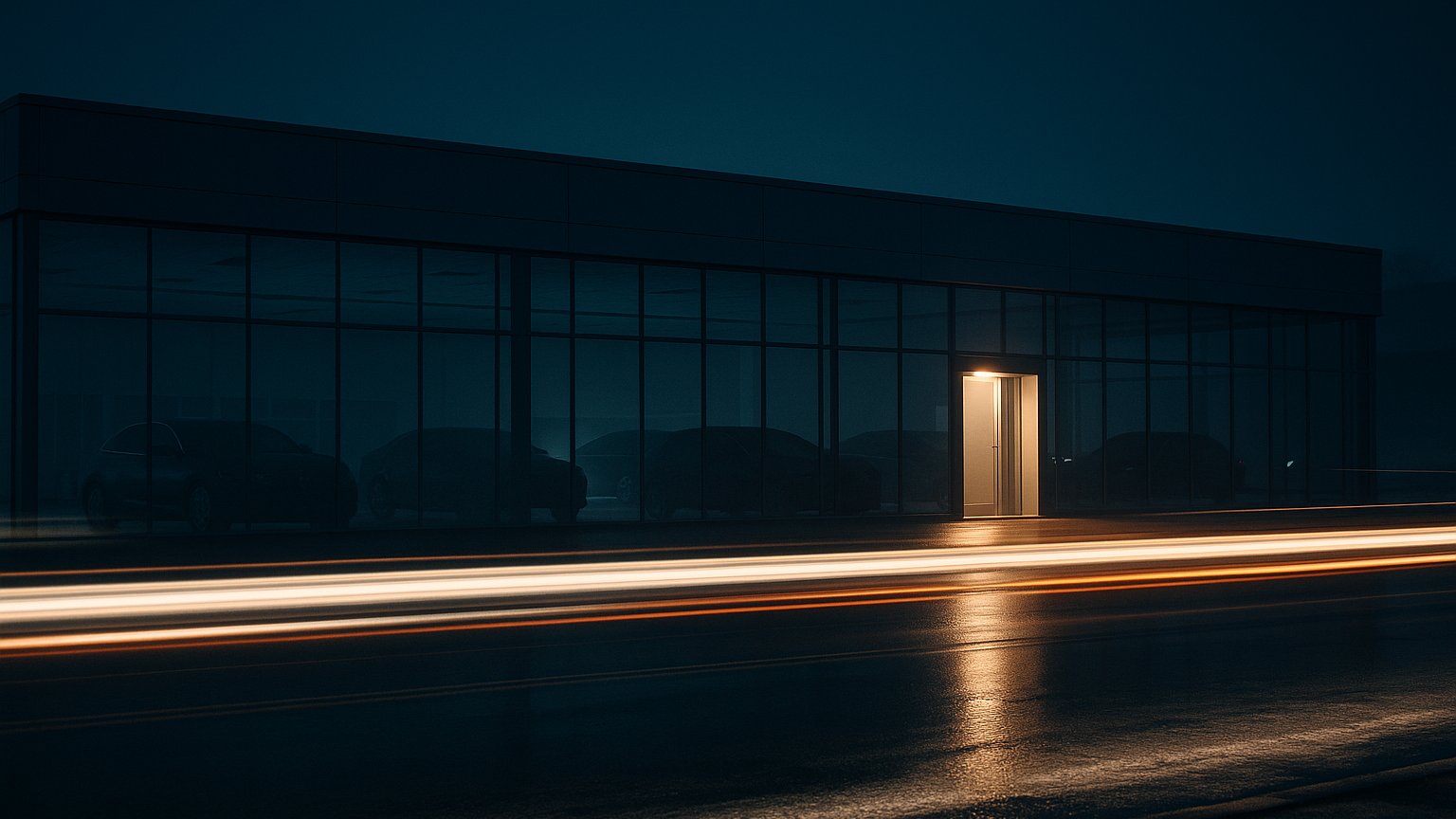
You spend enormous energy getting people to the front door. Then you leave the door unanswered.
The showroom already moved. The store didn’t follow.
This isn’t a story about the future. The shift already happened.
More than 90% of car buyers research online before they ever visit a dealership. The typical buyer now walks into just 1.4 dealerships before purchasing, down from 4.5 a decade ago. By the time someone reaches the floor, the real shopping is over.
And here’s the part most dealers underestimate: buyers don’t just want to research online, they want to buy there. 65% of shoppers say they’d complete some or most of the purchase online. Yet only about 5% are actually able to complete a purchase online today. That’s not a demand problem. It’s a storefront that stops short.
You can see it in the hours, too. Nearly 45% of online vehicle orders are placed between 4 p.m. and 5 a.m., and that figure comes specifically from dealers who offer online checkout. Give people a way to transact when the lights are off, and they will.
Even the hand-raisers go unanswered
It would be one thing if the small fraction who do reach out got a great experience. They don’t.
The data is decades old and still ignored: contact a lead within five minutes and you’re 21 times more likely to qualify it than if you wait thirty. Yet more than 18% of dealerships never respond to an internet lead at all, and an estimated 71% of leads are wasted on poor follow-up.
So the picture is this: 98 of 100 visitors are never engaged. A large share of the two who raise their hands are answered too slowly, or never. And the ones who’d happily buy online can’t.
That’s not a lead-generation problem. You already generated the lead, you paid for it, and it walked right in. That’s an answering problem, and a finishing problem.
You’d never run your floor this way
Picture it in the physical store. A hundred people walk in. Ninety-eight wander the showroom, sit on the units, read the price tags, and not one salesperson says a word. Two flag someone down; one gets ignored until they leave. And the handful ready to pay right now? There’s no register. They’re told to come back tomorrow, during business hours, to do it in person.
No dealer on earth would run that floor. But it’s exactly how most dealership websites operate every night. It’s the same gap we mapped in why your best buyers don’t keep business hours: the people who buy from you stopped shopping on your schedule a long time ago.
Greeting them is half of it. Letting them finish is the other half.
When dealers actually close that gap, the numbers move, and not by a little.
Digital retailing delivers a roughly 30% higher close rate and about 26% higher gross profit per deal. 67% of dealers report higher gross per deal after adopting it. And it’s not a tradeoff against experience: buyers who complete steps online save around 45 minutes at the dealership and report higher satisfaction. Faster for them, more profitable for the store, better for both.
The lesson is simple: the website shouldn’t just wave the customer in and take a message. It should be able to greet them, answer them, and, when they’re ready, let them complete the entire transaction online. Right there. At 11 p.m. on a Sunday.
Answering and closing is the advantage now
This is the problem the Ekho AI Sales Agent was built for. Every visitor gets greeted instantly and knowledgeably, any hour of the day. The ones who are ready can finish online: financing, paperwork, the full transaction, end to end. And your team gets handed real, qualified conversations and completed deals instead of cold form fills.
The point is not to replace the salespeople who are brilliant face-to-face. The role is to cover the hours, the volume, and the steps no human team can be everywhere for at once. Your people close in person. The website makes sure the buyer is greeted, and able to buy, long before and long after your people are on the floor.
The next dealership advantage won’t come from paying more for traffic. It’ll come from finally answering, and closing, the traffic you already have.
If you want to see what that looks like on your own leads, book a demo of the Ekho AI Sales Agent and we’ll walk one of your real after-hours leads through the workflow end to end. If you’re earlier in the conversation, see how the Ekho AI Sales Agent greets, qualifies, and closes every visitor.
Frequently asked questions
Industry benchmarks put the average dealership website conversion rate between 1.5% and 2%. That means for every hundred shoppers you pay to bring to the site, roughly ninety-eight leave without a single person engaging them. Most dealers track cost per lead closely but never measure this number, which is where the real leak is.
No. You already paid to generate the traffic and it arrived. The problem is that almost none of it gets answered, and the small share that raises a hand is often answered too slowly or never. Buying more traffic on top of a site that answers 2% of visitors just raises your cost per sold unit. The cheaper win is answering and finishing the traffic you already have.
No. Your salespeople are brilliant face-to-face, and that is where they should spend their time. An AI sales agent covers the hours, volume, and steps a human team cannot be everywhere for at once: greeting every overnight visitor, answering real questions, and handing your team qualified conversations and completed deals instead of cold form fills. People still close in person.
Speed is decisive. Contact a lead within five minutes and you are about 21 times more likely to qualify it than if you wait thirty. The first dealership to give a real answer almost always wins the buyer, and after hours that first answer rarely comes from a human team that has gone home.
Around 65% of shoppers say they would complete some or most of the purchase online, yet only about 5% are able to today because most dealership sites stop short of a real checkout. When the site can carry the buyer through financing and paperwork end to end, the buyers who want to finish online finally can, and the ones who prefer to come in still can. Disclosures and state-specific steps should be configured to align with FTC guidance and reviewed with your legal counsel before launch.